Today I have to start out with a bit of a reflection. When I was growing up, anywhere from 1 day old to about 20 years, I had limited self-awareness where fashion is concerned. Going into middle school I still wore bright pink cotton shorts with sparkly flower t-shirts because that is what was put into my drawers. I had an unique t-shirt collection in high school that I put absolutely no thought into collecting (Zildjian, Green Giant, Mozart, SconeOn, and so many more). When I wasn’t wearing t-shirts, I wore jeans painted with peace signs under flowered sundresses, men’s white shirts with a pastel plaid tie, and baggy flannel shirts that just scream lumberjack. These outfits would often be topped off with a bandana or cowboy hat, because at that point, why not?
Thank goodness that was before cell phone cameras, so there are limited pictures available!
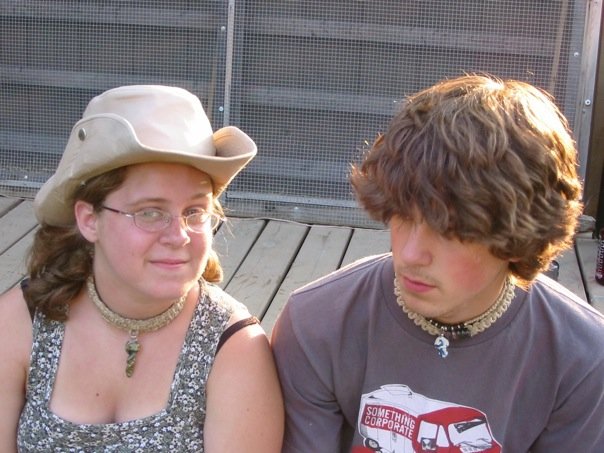
Thanks to the Queer Eye guys I have finally started to learn more about fashion and how to make clothes work for me, but I’d rather go re-live my high school geometry class than spend an evening studying clothes.
I tell you this so you can understand how tedious it is for me to figure out what my characters in 1920 Nome would be wearing. I’ve spent far too many evenings and afternoons looking up 1920 styles for men, women, and children, and still do not feel confident describing what they wear. The language to describe fabrics, patterns, and designs are not something I am used using. So I’m going to subject you, my imaginary audience, to descriptions of clothes as practice.
The Middy Blouse
We’ll start off with the middy top. Middy in this case does not short for “mid-drift,” but “midshipmen.” That’s right, a middy top refers to shirts taking after that classic sailor outfit: wide collars, draped bows hanging down, and a broad band at the bottom blow the waist. The sailor style was popular on many blouses though, and not all were middies. True middies were made from light cotton duck fabric or wool and was not designed to be tucked in. It’s a bit like rectangles and squares: all middies are middies, but not all middies are true middies.
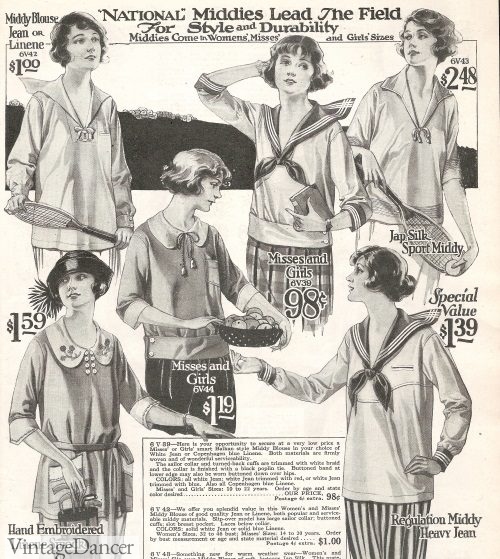
In the above photo, you can see several different variations of a middy top with those iconic elements we’d expect in a sailor shirt, especially the classic white shirt with blue collar; however, two of them are different from the others. The bottom left lady and the one directly to her right have rounded collars. The shirts still have most of the elements of the sailor middy like length and waist band, but that rounded collar is called a Peter Pan collar, first made famous in 1905 by an actress playing Peter Pan.
While looking up collars I found a cool article about Peter Pan collars and witches. If you have a spare 10 minutes, I recommend it!
Middy tops were worn predominately with skirts, though because they allowed so much more freedom of movement, middy tops with bloomers were adopted as gym wear. Which leads me to my next topic…
Bloomin’ Bloomers!
Bloomers were designed in 1850 as an alternative to the very restrictive fashion for women at the time. High fashion of the day were whale bone corsets and heavy skirts made even more heavy and ridged by added horse hair or straw in their petticoats. Bloomers were baggy pants. Simple and kinda “so what?” feeling today, but revolutionary in their day. Heck, Susan B. Anthony was a supporter and wearer of bloomers. They became crazy popular in some circles, but within a few years, everyone returned to long skirts and corsets. Why? Politics.

However, bloomers did resurface again forty years later, when women began riding bicycles and exercising more. These bloomers were puffy above, but fitted at the knee. Stockings would be worn to cover the lower leg. Over time the bloomers became a little shorter, and they’d be worn with middy tops.
Did you know: Bloomers got their name from Amelia Bloomer, a women’s rights activist? Now you know! (And knowing is half the battle…)
Bloomers are also known as knickers or knickerbockers, and knickers is British-speak for underwear. That got me thinking about bras. When were they invented, and when did the modern form of them catch on? Turns out, the 1930s. So my characters did not wear bras. I’m not anticipating needing to talk about underwear (it’s just not that kind of book…) but I needed to know what they would have worn so better envision them as real people.
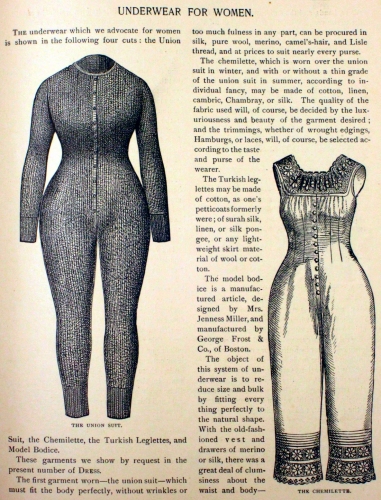
To save you reading the small print, this women’s magazine advocated for more “freeing” clothing for women, and recommended four undergarments: long underwear, chamilette, turkish leglettes, and model bodice. If you do read the article, it says undergarments were layered on top of each other, not worn separately. The function or purpose of the chamilette is not clear to me though, if it is worn with a bodice and turkish leglettes (essentially straight legged short pants).
Skirts, Skirts, Skirts…
Researching what type of skirt would have been worn around the 1920s was probably the most interesting aspect recently. It seems that 1920 was a grand collision of styles. There were elements of Edwardian fashion, but WWI caused fabric shortages and women hitting the workplace, and then the roaring 20’s flapper fashion was just getting started too. So here is the rabbit hole I went down for skirts:
In 1910-1913 “hobble skirts” were in vogue. They are just as they sound: skirts so tight that women could only hobble around in them, hardly moving. But in that article they referenced “war crinoline” skirts.
War Crinoline skirts were full multi-layer garments that were at odds with the modest sized ones WWI made necessary. They were a thing for less than a year before fashion swung back to conservative styles. If you look at the picture, you’ll see the dresses seem elegant (if you can ignore those hats. Geez.
That conservative style they went back to were simply long skirts that fell to their ankles, made in fairly dull colors (brown, grey, dark blue) of wool. They’d wear lace-up boots with them, or heels, or Keds. That’s right, the first Keds were made in 1917.
So what would she wear?
Margaret, my main character, is a 14 year old girl living in Nome, Alaska in 1920. Taking into account the year, how long it would take for fashion to reach Alaska, and practical considerations concerning the weather and amount of physical activity required of Alaskans, I think Margaret would have worn blue-collar clothes that reflect 1915 more than 1920. She would have ankle length wool one-peice dresses with Peter Pan collars, which she’d wear with a chami, long underwear and wool knickers in the winter. She would also have flannel petticoats, but wouldn’t need to wear them every day.
WWI may have dictated limited colors of fabrics, but a couple years later there would be more colors, particularly plaids and ginghams. Her mother would wear bland colored skirts with tucked in white blouses, but Margaret would push for more colorful middy tops and patterned skirts. As she becomes older, her skirts would get longer.
She’d have lace up boots to wear to school, mukluks for deep snow, and Keds for the summer. She’d wear her older brother’s old clothes (overalls, flannel shirts) with all of her usual under-things when helping her father work outside because they’re designed for more mobility.
In winter she’d wear her Inupiaq parka, because nothing they could make would be as warm. Some would dislike that decision, but this is one circumstance where practicality trumps fashion or what they’re used to. I’m sure women who were part of “the 400” wore fancier clothes, or more frequently sacrificed comfort for fashion, but I can’t imagine a working-class family being so impractical. Having lived in Nome for 20 years already, her parents would have known staying warm and dry in the winter is essential and wouldn’t have futzed around with inferior coats.
Final Reflections
So that article on war crinoline and hobble skirts both agreed that women dressed in more somber colors and minimalist fashions during WWI, and I got to thinking about history. WWI ended in 1918, but that is also when the Spanish Flu pandemic struck, so I am betting the WWI style continued on a bit longer to 1920. I’ve only found one source so far that mentions such a thing, but I’m impressed there is even one. Then here comes 1920, a new decade, pandemic is passed, a young generation perhaps disillusioned from the long war… in comes the live-for-today flapper.
And here we are today, with wars in the middle-east for at least the last 20 years, many millennials disillusioned about politics/jobs, and at the end of a pandemic (fingers crossed). I wonder how current events and fashion will reflect each other in 2020s?
As one of my favorite doctors said, “Ladies and gentlemen, take my advice: pull down your pants and slide on the ice.” ‘Til next time folks.
 Northern Skies Publishing