About ten years ago I worked in a data-entry job near Detroit. It was my first full-time job in the United States, and so the first time working in a truly diverse environment (I had a full-time job in Japan, but it was as diverse as classic animated Disney movies, and I was the minority). I had a lot of fun with the ladies I worked with at that data entry job. There was a little tough woman who spoke with a Jersey accent, the typical mid-western mom, the super patriot catholic suburban lady, a dog lady, a rash and outspoken youngster, and the sarcastic tell-it-like-it-is woman. It’s this last person I adored the most and that I miss from time to time. She’d have me holding my sides with her humor, often at my own expense. She was a born and raised Detroiter, and I was from the white suburbs, so there was a lot of fuel for that humor.
I remember quite a few of our conversations. One was about a Memorial Day picnic and how a white woman who had been invited by someone else dared to bring potato salad. “She brought potato salad to my house. My house!* Mmm-mmm *shake of the head* white women!” I made a mental note then and there never to bring potato salad to a black friend’s house, though I’m still not sure why not?
Close to my one year anniversary of working there, we had a conversation about cold weather. She said she hated it, and in my enthusiasm for winter, asked her why she didn’t like the cold. I went on about how there are cozy sweaters, sledding, snowball fights, skiing, hot chocolate, Christmas, and 90% of my favorite comfort foods. She looked at me, stopped typing, and said dead-pan, “Sarah Bay, how many black people you seen skiing? Sledding? How many black people live up north?” I’d never noticed before, but since then I’ve seen off hand comments in articles about how much black people hate the cold.**
At this point, I have a confession to make. I am embarrassed to admit that in the months I’ve been researching Alaska, I had not considered black people in Nome. Native Americans/Inupiat, yes. Racial discrimination against Natives, yes. That’s already featuring in the book. But it never occurred to me that black people would be that far north. For that I apologize.
Luckily, while researching a completely different topic, I found a fascinating book called “Black History in the Last Frontier,” made available by the National Park Service. It is filled with mini-biographies of black men and women who made Alaska their home; all of them were “exceptional figures” for living in a territory with no black community, yet faced with similar similar discrimination as the lower 48. Back in 1910, black people made up less than 3% of Alaska’s population. To put that in perspective, that would be only 208 individuals in an area twice the size of Texas.
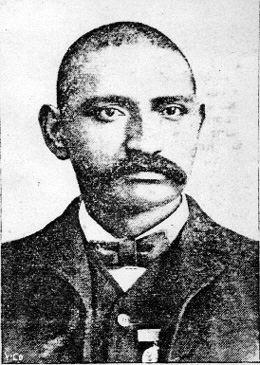
And guess what? A black woman named G.B Verden operated a hotel just outside Nome at Gold Run. She charged $109/month, and returned to the lower 48 a very rich woman. Another black woman that was known as Black Alice lived along Anvil Creek in Nome. She had many jobs, including prostitute, laundress, and restaurant owner. She’d charge $5/meal, which was outrageously expensive, but it’s telling that people were willing to pay it.
And then there was L Company, an all black regiment that was stationed in Skagway and some surrounding towns. They tamed the chaos during gold rushes, helped build winter shelters, and roads. At least 25 of them decided to stay in Alaska after they mustered out. So what, it’s only 25? That’s huge, a 14.5% increase!
I can’t promise one of my characters in this book will be black, but I will see how they can be represented.
I think it would be fascinating to write a story of an L Company soldier who decided to stay in Alaska, and follow his path north through Alaska’s interior up to Nome. But I am very conscious of being a white woman, so writing a black man’s story seems… insensitive? stealing the narrative? well, it seems wrong.
I wish someone would write that story though, because I want to read it 🙂
*it may not have been her house; it could have been a cousin, or a friend. My memory fails me on that point, but I know it was a white woman bringing potato salad.
**This is not to say that ALL black people dislike the cold, or that white people all like it. I am simply repeating a sentiment said by a black co-worker and connecting it to my personal blind spot.
 Northern Skies Publishing
One thought on “Black History in Alaska”