1920 Alaska is fascinating.
The country as a whole was on the cups of modernization. Edison started his electric company back in the 1880s, and by 1925 50% of the United States had residential electricity.
The 1908 Model T were rapidly replacing carriages and carts. There are plenty of pictures taken in Nome that show cars driving down streets or parked near the docks.
Not everyone had a car, and not everyone had electricity at home, but it was coming, along will all of the cultural changes those inventions would instigate.
But then add a healthy dose of the wild-west to cars and electricity, because by 1920 Alaska was the “final frontier” after the lower 48 was tamed. Wyatt Earp himself spent four years building up a couple saloons in Alaska. The most famous of them was the Dexter in Nome.
What do you get when you add electricity, new inventions, the wild west, and Alaska? A freezing cold steam-punk world, of course. Perhaps like Dead Lands, just without the nuclear fall-out and horror elements (Okay, so nothing like Dead Lands).
But there was so much more happening around 1920 that would influence my characters. The Spanish Flu pandemic struck Nome in October 1918, which wiped out Native settlements. Soldiers returning from WWI were eligible for “free” land thanks to the Homestead Act of 1862. Nome’s population had been dropping rapidly from 12,488 in 1900 during the Gold Rush to 852 in 1920. Nome was isolated for almost half of the year, but events outside Alaska would obviously have an effect too. So I need to consider the second raising of the Klu Klux Klan in 1915, the 1918 race riot in East St. Louis, and Jim Crow/segregation laws. As I’ve mentioned before in Black History in Alaska, there weren’t a lot of black people in Alaska, but a similar racism was applied to Natives.
The setting of a book could be the 1920s and never mention race, but I don’t think I should write around a problem. If I describe details about their clothes, about courting, about foods, then I need to write honestly about social interactions and society norms too.
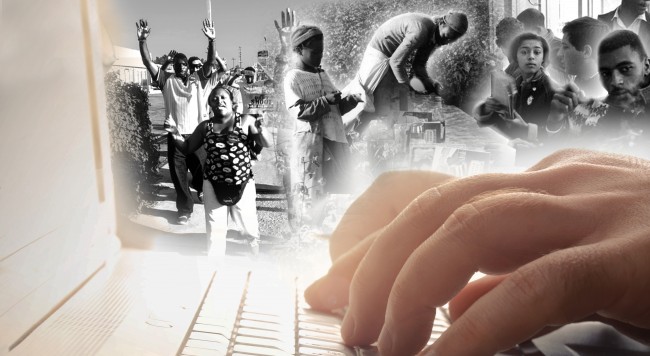
I’ve struggled with this. After writing Black History in Alaska I felt like an impostor. Who am I, as a white woman from Ohio, to talk about what racism in Nome was like? How it would impact people? Or even what the real attitudes were? I can tell ya, it’s yet another area that Google fails.
There is a bigger conversation going on about creating POC characters. Some people believe only POC should write POC characters; that a white person writing a POC character is “stealing” the narrative, or that they don’t have “permission” to write that minority’s story.
I personally agree with Laura Lippman who said, “Once I concede that there are any subjects I’m not ‘allowed’ to write about, all subjects except my own life will be closed to me.” And let me tell you, the last thing anyone wants to hear about is “The Adventures of White Woman in Small Town Ohio.”
Racism is not the focus of my book. My book follows the life of a 15 year old girl whose parents’ sailed to Nome in 1900. She was born in Nome five years later, and has a fascination with aeroplanes. But racism existed. So if I’m not going to write around the problem of racism in Alaska in 1920, I’m going to do my best to really explore my Native characters’ identity and the atmosphere in which they lived. There is a certain emotional truth I’m looking for in their voices and actions. Facing those truths will probably be difficult, and I’ll probably want to protect myself through writing (be that one white person who defies the odds and is not racist). Hopefully, through a lot of research and narrative reading, I can be the other, and be their truth.
 Northern Skies Publishing